We use cookies to ensure our site functions properly and to store limited information about your usage. You may give or withdraw consent at any time. To find out more, read our privacy policy and cookie policy.
Manage Cookies
A cookie is information stored on your computer by a website you visit. Cookies often store your settings for a website, such as your preferred language or location. This allows the site to present you with information customized to fit your needs. As per the GDPR law, companies need to get your explicit approval to collect your data. Some of these cookies are ‘strictly necessary’ to provide the basic functions of the website and can not be turned off, while others if present, have the option of being turned off. Learn more about our Privacy and Cookie policies. These can be managed also from our cookie policy page.
Strictly necessary cookies(always on):
Necessary for enabling core functionality. The website cannot function properly without these cookies. This cannot be turned off. e.g. Sign in, Language
Analytics cookies:
Analytical cookies help us to analyse user behaviour, mainly to see if the users are able to find and act on things that they are looking for. They allow us to recognise and count the number of visitors and to see how visitors move around our website when they are using it. Tools used: Google Analytics
Share Horseshoe Bay / Langdale Infrastructure Program on FacebookShare Horseshoe Bay / Langdale Infrastructure Program on X (formerly Twitter)Share Horseshoe Bay / Langdale Infrastructure Program on LinkedinEmail Horseshoe Bay / Langdale Infrastructure Program link
BC Ferries is undertaking a significant infrastructure project at Horseshoe Bay and Langdale terminals to improve on-time performance, enhance the customer experience and ensure continued safe and reliable operations.
The Horseshoe Bay terminal has been in operation for over 65 years and is one of our oldest and busiest terminals. Annually, the terminal serves almost 7 million passengers and over 3 million vehicles travelling to and from Nanaimo, the Sunshine Coast and Bowen Island.
Langdale Terminal, located on the Sunshine Coast, has been in operation for over 70 years and plays a vital role in connecting the Sunshine Coast to the Lower Mainland. It supports essential travel for residents, visitors, goods, and services, and is a key part of the region’s transportation network.
Starting October 15, 2025:
All customers travelling by vehicle, including motorcycles and commercial vehicles, from Vancouver (Horseshoe Bay) to Nanaimo (Departure Bay) are required to book and pay in advance, before arriving at the terminal (only required for travel in this direction).
Drive-up (at-terminal) and Reservation-only fares are no longer be available for travel in this direction.
Customers will be able to choose between Prepaid and Saver fares for their travel.
Sign-up for the Horseshoe Bay / Langdale Infrastructure Program e-newsletter to keep up-to-date about the Program. Click the subscribe button on the top right of this page.
Project updates
► Construction updates
A multi-year capital construction program is underway at Horseshoe Bay and Langdale terminals. To ensure we keep residents and community members informed, details regarding construction will be updated regularly.
If you have a question or concern, please reach out to the project team: hsbproject@bcferries.com or call: 1-888-BC FERRY (223-3779).
June 2026
The early works at Horseshoe Bay began in the fall of 2025 with the implementation of the alternate service plan (requiring all vehicles to book in advance for travel to Departure Bay) and the reconfiguring of the terminal to prepare for construction. Learn more about travel to Nanaimo here.
Early Works:
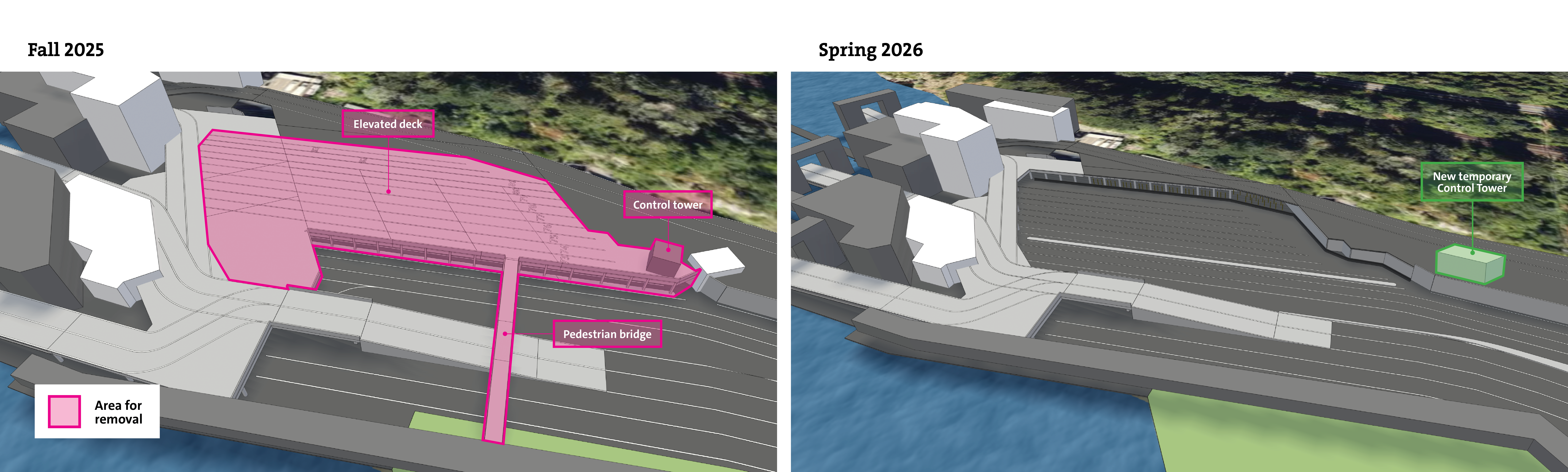
The rendering on the left shows the terminal in the fall of 2025. The pink area shows the structures that have been demolished. The image on the right is an artist rendering of what the terminal looks like now.
The early works at Horseshoe Bay included:
Life extension work to the transfer deck
Upgrades to the waiting room stairs and landings
Removal of the pedestrian bridge
Installation of a new control tower
Removal of the old control tower
Installation of new fencing
Removal of the majority of the elevated deck structure
Installation of 17 piles to shore up the remaining elevated deck structure
Installation of new utilities
Paving and re-opening staging lanes in the lower terminal
The early works are complete at Horseshoe Bay. As planning progresses on the future works, updates will be provided here.
Future Work:
Work will occur at Langdale at Berth 1 in late fall. Brief details can be found below. Additional details on the Langdale Berth 1 work can be found here.
Activity
Date range (subject to change)
Shift - day or night
Langdale Berth 1 Life Extension
Construction to extend the life of the berth structure
Late 2026 to March 2027
Day and night shift
See below for additional details for each stage of construction.
Langdale Berth 1 Life Extension
Dates: Late 2026 to March 2027
Construction times: Day and night work
Construction activity
The project will extend the life of key infrastructure including:
Vehicle ramps: lower and upper ramps
Aprons on the upper and lower ramps
Wingwalls
Headframe: including piles, tower, cap beams, and existing lift system
Electrical and ramp controls system upgrades
Mitigations
To ensure that this work can be undertaken while passengers and essential goods and services can continue to travel, work is being carried out between sailings and at night.
A three-week berth closure is required between February 3 - 23, 2027. During this time an alternate service plan will be in effect, utilising Berth 2. Find out more here.
Construction noise will include typical construction activities and periodic use of heavy equipment. A noise bylaw exemption will be requested from the Sunshine Coast Regional District as required, and advance notice will be provided to nearby residents.
Contractors will be required to minimize disruption wherever possible.
► Parking updates
Parking at the terminals may be impacted at times during the construction. More details can be found below.
Horseshoe Bay
A section of the surface parking lot adjacent to Horseshoe Bay terminal was used as a construction laydown area and site office during the early works.
This has now been returned to parking.
During future construction work at the terminal, parking may be impacted and information will be provided here.
Is more parking available at Horseshoe Bay?
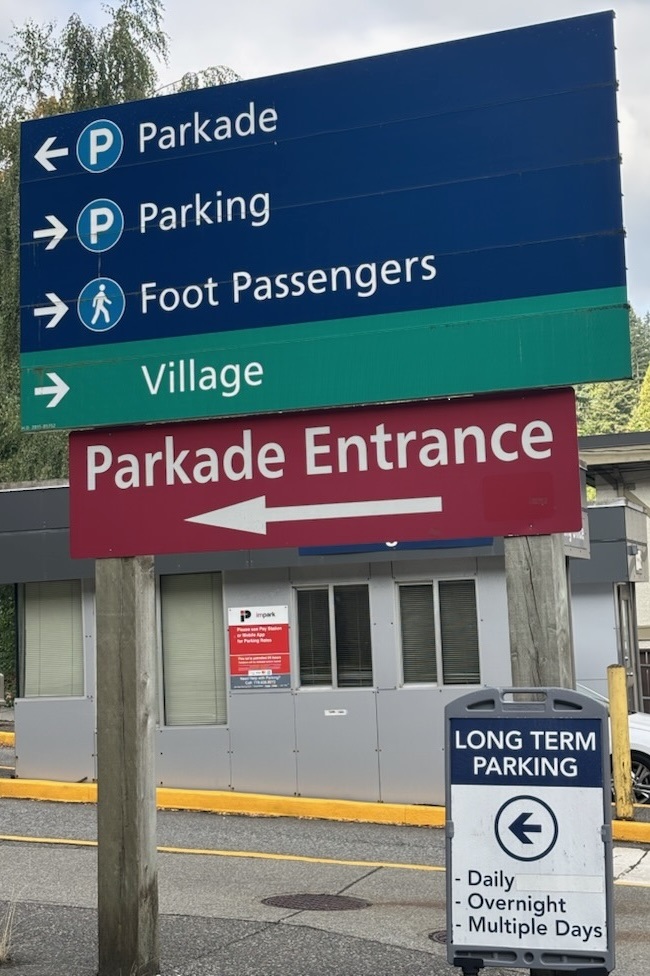
Yes. More parking is available in the BC Ferries parkade located to the south of the terminal. The parkade is the same price as the short-term lot and is just a three-minute walk away.
The entrance to the parkade is on the left after making the turn to enter the terminal and the Village. If you miss the turning, don’t worry, you can exit the parking lot as if exiting the terminal and circle back around easily by turning RIGHT at the traffic light.
Picking up?
If you are picking up passengers from the terminal, please be aware that the Drop off Area has a 3-minute maximum wait time. To assist others, please ensure you park as close to the car in front, to allow space behind you, and be mindful of the wait time.
Travel by transit
Horseshoe Bay is serviced by TransLink. Transit will not be impacted by the construction.
Over the next several years, the terminal will undergo a series of improvements to address aging infrastructure and improve operations, as well as address current and future demand for ferry service, driven by significant population growth along the BC coast.
Horseshoe Bay/Langdale Infrastructure Program reaches major milestone as multi-year improvements continue
30 Jun 2026
BC Ferries has reached a major milestone in the multi-year Horseshoe Bay / Langdale Infrastructure Program with the completion of a significant phase of work at the Horseshoe Bay terminal.
We’ve updated the booking window again for sailings departing Horseshoe Bay to Departure Bay (Nanaimo). The cutoff window for a new booking is now 30-minutes before departure! This allows customers more flexibility to adjust their plans while supporting smoother operations during construction.
Waiting Room A: Access During Construction 04 Feb 2026
As part of the Transfer deck life extension phase III work, steel and concrete repairs will be undertaken to the stairs and landings connected to Waiting Room A at Horseshoe Bay.
Work will commence on the evening of Sunday, February 8 until March 12. During construction, access to Waiting Room A for foot passengers for Bowen Island and Langdale will be by the “exit stairs”, located 16 metres further down the walkway.
Access from ground level will be via the elevator only - UNTIL LATE APRIL
Access from the pedestrian walkway will be via the exit stairs
Elevator access from the pedestrian walkway will be maintained during construction
Please follow signage and directions from terminal staff.
More Flexibility: 60-min Booking Window
01 Dec 2025
We’ve updated the booking window for sailings departing Horseshoe Bay to Departure Bay (Nanaimo), shortening the cutoff for creating a new booking from two hours to one hour before departure. This refinement gives customers more flexibility to adjust their plans closer to travel while supporting smoother operations during construction.
Horseshoe Bay booking changes to include customer improvements
07 Aug 2025
Starting October 15, all customers travelling by vehicle, including motorcycles, from Horseshoe Bay to Departure Bay (Nanaimo) will be required to book and pay in advance, before arriving at the terminal. This is only required for travel in this direction. This change will help keep customers moving and maintain safety through the multi-year construction program at the terminal, where vehicle staging space will be reduced by 25%.
Once these changes take effect, Drive-up (at-terminal) and Reservation-only fares will no longer be available in this direction. Customers will be able to choose between Prepaid and Saver fares for their travel. Commercial vehicles will also need to reserve in advance, but their fare structure and payment process will remain unchanged.
Horseshoe Bay to Nanaimo (Departure Bay) advance booking model survey
28 May 2025
Beginning in fall 2025, an advance booking model will be introduced for all vehicles travelling from Horseshoe Bay to Nanaimo (Departure Bay). The option to purchase ‘At Terminal’ fare will no longer be available (except to foot passengers). This change is required in order to better manage traffic and the flow of vehicles, and to accommodate a 25% reduction in space at the terminal during the critical infrastructure renewal project at Horseshoe Bay.
To better understand customer choices and preferences for booking travel, we surveyed customers who use this route in spring and summer 2025 and engaged with customers onboard. This survey is now closed.
Thanks for participating. Your insights will help us better understand how this model will impact travellers and identify opportunities for improvement. Decisions about this project will also be informed by regulatory obligations, budgetary constraints, safety standards, environmental standards, technical and operational feasibility, and other considerations.
May Update: Construction advances, customer-focused improvements coming for Horseshoe Bay
01 May 2025
In May 2025 we announced we're advancing critical infrastructure renewal at the Horseshoe Bay terminal, with planning and procurement underway and the first major phase of construction set to begin this fall.
About the essential infrastructure improvements and customer-focused changes
As this work progresses, we are committed to keeping the community and interest holders informed about the work being undertaken and will provide as much notice as possible in advance of any anticipated changes or disruptions.
February update: essential infrastructure improvements announced
19 Feb 2025
In February 2025 we announced we’re planning a series of essential infrastructure improvements at Horseshoe Bay terminal over the next several years.
About the Essential Infrastructure Improvements
Over the next several years, the terminal will undergo a series of essential improvements to address aging infrastructure and improve operations, as well as address current and future demand for ferry service, driven by significant population growth along the BC coast.
As this work progresses, we are committed to keeping the community and interest holders informed about the work being undertaken and will provide as much notice as possible in advance of any anticipated changes or disruptions.
► Engagement updates
May 2026
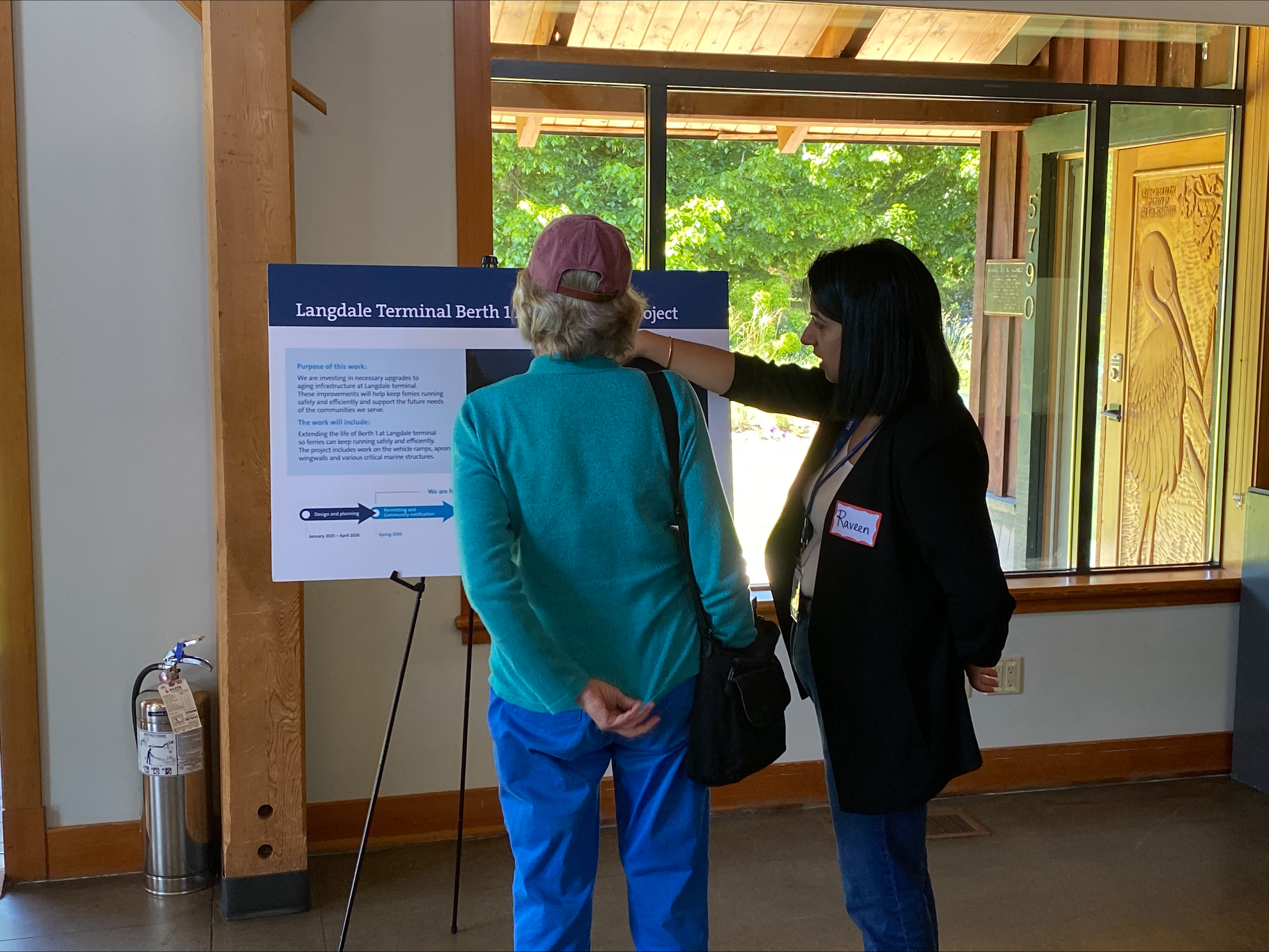
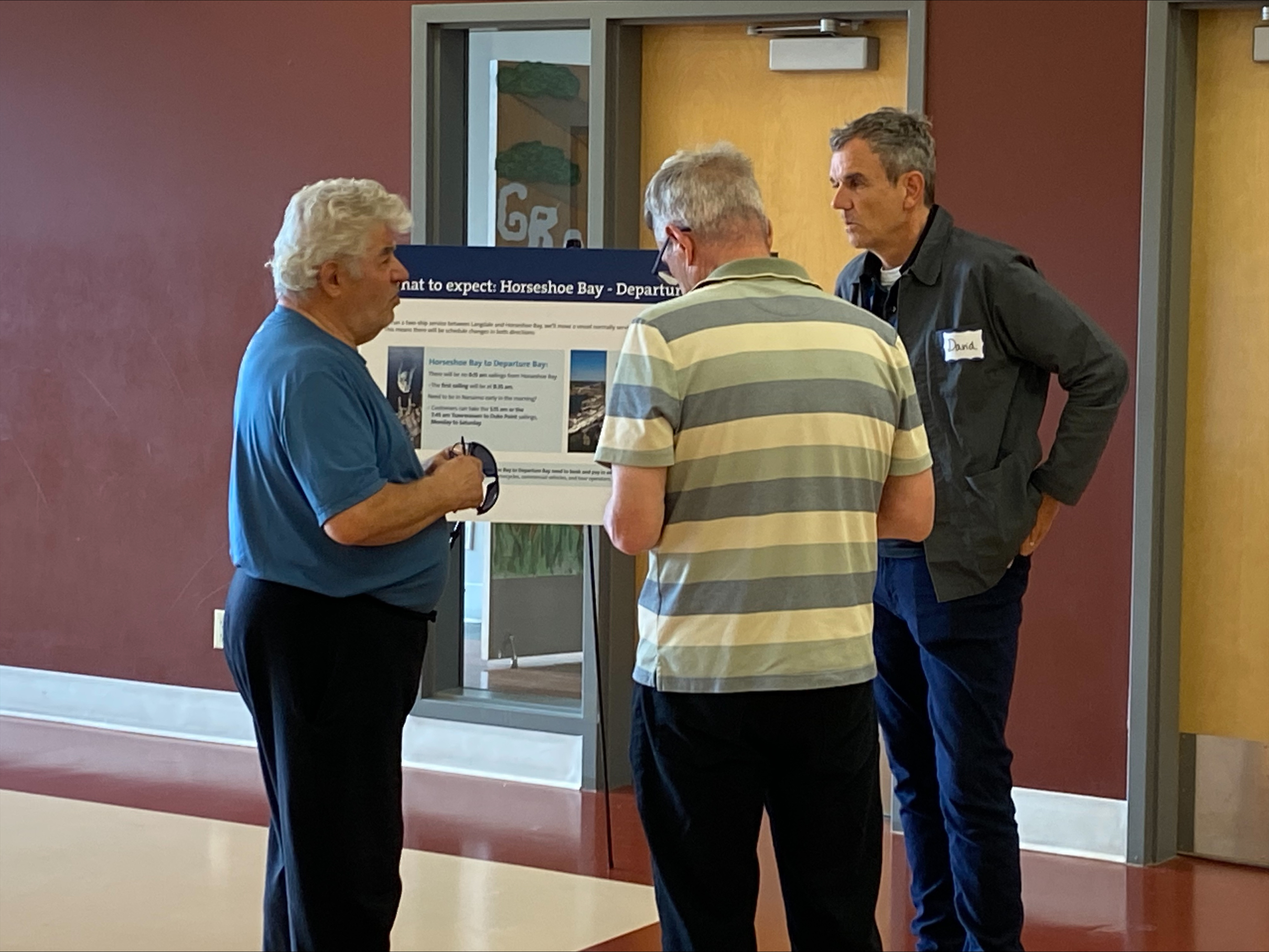
Two drop-in information sessions and several on-board pop up engagements were held in May 2026, to inform about the Langdale Berth 1 Life Extension work and alternate service plan. This work is due to begin in late 2026 and be complete by spring 2027.
For those unable to make the events, the boards from the session are available here. And a summary of the engagement can be found here.
The Project page is a great source of additional information.
October 2025
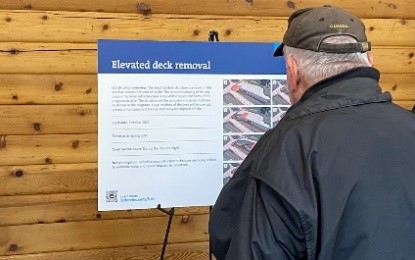
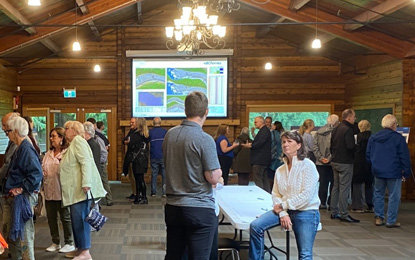
The Project Team held their first Program open house on October 1, 2025, at the Gleneagles Clubhouse in West Vancouver. Over 110 people joined us over the duration of the evening to learn more about the Program, upcoming construction in this phase of the Program, and how we’re mitigating impacts to the surrounding community.
For those unable to make the event, the boards from the session are available to view here.
A summary of the questions and comments we received is also available here.
Committed to regular updates
As this work progresses, we are committed to keeping the community and interest holders informed about the work being undertaken and will provide as much notice as possible in advance of any anticipated changes or disruptions.
Sign-up for the Horseshoe Bay / Langdale Infrastructure Program e-newsletter to keep up-to-date about the Program. Click the subscribe button on the top right of this page.
If you have a question or concern, please reach out to the project team: hsbproject@bcferries.com or call: 1-888-BC FERRY (223-3779).
BC Ferries is undertaking a significant infrastructure project at Horseshoe Bay and Langdale terminals to improve on-time performance, enhance the customer experience and ensure continued safe and reliable operations.
The Horseshoe Bay terminal has been in operation for over 65 years and is one of our oldest and busiest terminals. Annually, the terminal serves almost 7 million passengers and over 3 million vehicles travelling to and from Nanaimo, the Sunshine Coast and Bowen Island.
Langdale Terminal, located on the Sunshine Coast, has been in operation for over 70 years and plays a vital role in connecting the Sunshine Coast to the Lower Mainland. It supports essential travel for residents, visitors, goods, and services, and is a key part of the region’s transportation network.
Starting October 15, 2025:
All customers travelling by vehicle, including motorcycles and commercial vehicles, from Vancouver (Horseshoe Bay) to Nanaimo (Departure Bay) are required to book and pay in advance, before arriving at the terminal (only required for travel in this direction).
Drive-up (at-terminal) and Reservation-only fares are no longer be available for travel in this direction.
Customers will be able to choose between Prepaid and Saver fares for their travel.
Sign-up for the Horseshoe Bay / Langdale Infrastructure Program e-newsletter to keep up-to-date about the Program. Click the subscribe button on the top right of this page.
Project updates
► Construction updates
A multi-year capital construction program is underway at Horseshoe Bay and Langdale terminals. To ensure we keep residents and community members informed, details regarding construction will be updated regularly.
If you have a question or concern, please reach out to the project team: hsbproject@bcferries.com or call: 1-888-BC FERRY (223-3779).
June 2026
The early works at Horseshoe Bay began in the fall of 2025 with the implementation of the alternate service plan (requiring all vehicles to book in advance for travel to Departure Bay) and the reconfiguring of the terminal to prepare for construction. Learn more about travel to Nanaimo here.
Early Works:
The rendering on the left shows the terminal in the fall of 2025. The pink area shows the structures that have been demolished. The image on the right is an artist rendering of what the terminal looks like now.
The early works at Horseshoe Bay included:
Life extension work to the transfer deck
Upgrades to the waiting room stairs and landings
Removal of the pedestrian bridge
Installation of a new control tower
Removal of the old control tower
Installation of new fencing
Removal of the majority of the elevated deck structure
Installation of 17 piles to shore up the remaining elevated deck structure
Installation of new utilities
Paving and re-opening staging lanes in the lower terminal
The early works are complete at Horseshoe Bay. As planning progresses on the future works, updates will be provided here.
Future Work:
Work will occur at Langdale at Berth 1 in late fall. Brief details can be found below. Additional details on the Langdale Berth 1 work can be found here.
Activity
Date range (subject to change)
Shift - day or night
Langdale Berth 1 Life Extension
Construction to extend the life of the berth structure
Late 2026 to March 2027
Day and night shift
See below for additional details for each stage of construction.
Langdale Berth 1 Life Extension
Dates: Late 2026 to March 2027
Construction times: Day and night work
Construction activity
The project will extend the life of key infrastructure including:
Vehicle ramps: lower and upper ramps
Aprons on the upper and lower ramps
Wingwalls
Headframe: including piles, tower, cap beams, and existing lift system
Electrical and ramp controls system upgrades
Mitigations
To ensure that this work can be undertaken while passengers and essential goods and services can continue to travel, work is being carried out between sailings and at night.
A three-week berth closure is required between February 3 - 23, 2027. During this time an alternate service plan will be in effect, utilising Berth 2. Find out more here.
Construction noise will include typical construction activities and periodic use of heavy equipment. A noise bylaw exemption will be requested from the Sunshine Coast Regional District as required, and advance notice will be provided to nearby residents.
Contractors will be required to minimize disruption wherever possible.
► Parking updates
Parking at the terminals may be impacted at times during the construction. More details can be found below.
Horseshoe Bay
A section of the surface parking lot adjacent to Horseshoe Bay terminal was used as a construction laydown area and site office during the early works.
This has now been returned to parking.
During future construction work at the terminal, parking may be impacted and information will be provided here.
Is more parking available at Horseshoe Bay?
Yes. More parking is available in the BC Ferries parkade located to the south of the terminal. The parkade is the same price as the short-term lot and is just a three-minute walk away.
The entrance to the parkade is on the left after making the turn to enter the terminal and the Village. If you miss the turning, don’t worry, you can exit the parking lot as if exiting the terminal and circle back around easily by turning RIGHT at the traffic light.
Picking up?
If you are picking up passengers from the terminal, please be aware that the Drop off Area has a 3-minute maximum wait time. To assist others, please ensure you park as close to the car in front, to allow space behind you, and be mindful of the wait time.
Travel by transit
Horseshoe Bay is serviced by TransLink. Transit will not be impacted by the construction.
Over the next several years, the terminal will undergo a series of improvements to address aging infrastructure and improve operations, as well as address current and future demand for ferry service, driven by significant population growth along the BC coast.
Horseshoe Bay/Langdale Infrastructure Program reaches major milestone as multi-year improvements continue
30 Jun 2026
BC Ferries has reached a major milestone in the multi-year Horseshoe Bay / Langdale Infrastructure Program with the completion of a significant phase of work at the Horseshoe Bay terminal.
We’ve updated the booking window again for sailings departing Horseshoe Bay to Departure Bay (Nanaimo). The cutoff window for a new booking is now 30-minutes before departure! This allows customers more flexibility to adjust their plans while supporting smoother operations during construction.
Waiting Room A: Access During Construction 04 Feb 2026
As part of the Transfer deck life extension phase III work, steel and concrete repairs will be undertaken to the stairs and landings connected to Waiting Room A at Horseshoe Bay.
Work will commence on the evening of Sunday, February 8 until March 12. During construction, access to Waiting Room A for foot passengers for Bowen Island and Langdale will be by the “exit stairs”, located 16 metres further down the walkway.
Access from ground level will be via the elevator only - UNTIL LATE APRIL
Access from the pedestrian walkway will be via the exit stairs
Elevator access from the pedestrian walkway will be maintained during construction
Please follow signage and directions from terminal staff.
More Flexibility: 60-min Booking Window
01 Dec 2025
We’ve updated the booking window for sailings departing Horseshoe Bay to Departure Bay (Nanaimo), shortening the cutoff for creating a new booking from two hours to one hour before departure. This refinement gives customers more flexibility to adjust their plans closer to travel while supporting smoother operations during construction.
Horseshoe Bay booking changes to include customer improvements
07 Aug 2025
Starting October 15, all customers travelling by vehicle, including motorcycles, from Horseshoe Bay to Departure Bay (Nanaimo) will be required to book and pay in advance, before arriving at the terminal. This is only required for travel in this direction. This change will help keep customers moving and maintain safety through the multi-year construction program at the terminal, where vehicle staging space will be reduced by 25%.
Once these changes take effect, Drive-up (at-terminal) and Reservation-only fares will no longer be available in this direction. Customers will be able to choose between Prepaid and Saver fares for their travel. Commercial vehicles will also need to reserve in advance, but their fare structure and payment process will remain unchanged.
Horseshoe Bay to Nanaimo (Departure Bay) advance booking model survey
28 May 2025
Beginning in fall 2025, an advance booking model will be introduced for all vehicles travelling from Horseshoe Bay to Nanaimo (Departure Bay). The option to purchase ‘At Terminal’ fare will no longer be available (except to foot passengers). This change is required in order to better manage traffic and the flow of vehicles, and to accommodate a 25% reduction in space at the terminal during the critical infrastructure renewal project at Horseshoe Bay.
To better understand customer choices and preferences for booking travel, we surveyed customers who use this route in spring and summer 2025 and engaged with customers onboard. This survey is now closed.
Thanks for participating. Your insights will help us better understand how this model will impact travellers and identify opportunities for improvement. Decisions about this project will also be informed by regulatory obligations, budgetary constraints, safety standards, environmental standards, technical and operational feasibility, and other considerations.
May Update: Construction advances, customer-focused improvements coming for Horseshoe Bay
01 May 2025
In May 2025 we announced we're advancing critical infrastructure renewal at the Horseshoe Bay terminal, with planning and procurement underway and the first major phase of construction set to begin this fall.
About the essential infrastructure improvements and customer-focused changes
As this work progresses, we are committed to keeping the community and interest holders informed about the work being undertaken and will provide as much notice as possible in advance of any anticipated changes or disruptions.
February update: essential infrastructure improvements announced
19 Feb 2025
In February 2025 we announced we’re planning a series of essential infrastructure improvements at Horseshoe Bay terminal over the next several years.
About the Essential Infrastructure Improvements
Over the next several years, the terminal will undergo a series of essential improvements to address aging infrastructure and improve operations, as well as address current and future demand for ferry service, driven by significant population growth along the BC coast.
As this work progresses, we are committed to keeping the community and interest holders informed about the work being undertaken and will provide as much notice as possible in advance of any anticipated changes or disruptions.
► Engagement updates
May 2026
Two drop-in information sessions and several on-board pop up engagements were held in May 2026, to inform about the Langdale Berth 1 Life Extension work and alternate service plan. This work is due to begin in late 2026 and be complete by spring 2027.
For those unable to make the events, the boards from the session are available here. And a summary of the engagement can be found here.
The Project page is a great source of additional information.
October 2025
The Project Team held their first Program open house on October 1, 2025, at the Gleneagles Clubhouse in West Vancouver. Over 110 people joined us over the duration of the evening to learn more about the Program, upcoming construction in this phase of the Program, and how we’re mitigating impacts to the surrounding community.
For those unable to make the event, the boards from the session are available to view here.
A summary of the questions and comments we received is also available here.
Committed to regular updates
As this work progresses, we are committed to keeping the community and interest holders informed about the work being undertaken and will provide as much notice as possible in advance of any anticipated changes or disruptions.
Sign-up for the Horseshoe Bay / Langdale Infrastructure Program e-newsletter to keep up-to-date about the Program. Click the subscribe button on the top right of this page.
If you have a question or concern, please reach out to the project team: hsbproject@bcferries.com or call: 1-888-BC FERRY (223-3779).